9 hr
Atherton Tablelands Food & Scenery Day Trip
- Expert local guide
- Small group
- Skip-the-line access
- Free cancellation
Atherton Tablelands Tour from Port Douglas — Volcanic Lakes & Rainforest Highlands
Volcanic craters, mirror lakes, ancient forests — the tablelands rise 900 metres above the coast.
Compare fares, pick the fit — all bookings are mobile-voucher and eligible for free cancellation where shown.
9 hr
8 hr
9 hr
Exploring the region via an atherton tablelands tour from port douglas provides a flexible way to discover crater lakes and rainforest trails. As the area is a public destination, visitors can choose between self-guided exploration or professional coach services to navigate these natural landmarks.
| Self-Guided Drive Flexible Exploration |
Top pick Guided Coach Tour Public Transport Access |
|
|---|---|---|
| Entrance Fee | 0 AUD | 0 AUD |
| Best Arrival Window | 07:00–10:00 | 07:00–10:00 |
| Primary Transport | Personal Vehicle | Public Coach Service |
| Region Access | Full Regional Freedom | Designated Stop Coverage |
| Best for | First-timers seeking autonomy | Visitors preferring guided transit |
| See tickets & prices |
Verdict: The self-drive option is ideal for those wanting maximum flexibility, while an atherton tablelands tour from port douglas tickets provide a reliable, cost-effective transit solution for your visit.
Worth it for nature lovers seeking variety
An atherton tablelands tour from port douglas delivers exceptional value for travelers wanting to escape coastal crowds and explore Queensland's agricultural heartland. The Atherton Tablelands Food & Scenery Day Trip—the primary tour option departing from Port Douglas—combines crater lakes, rainforest pockets, local produce tastings, and wildlife spotting across a full day. Entry to the region itself costs zero dollars, but organized tours handle the 90-minute transfer each way and curate stops at Cathedral Fig Tree, volcanic lakes, and farmgate experiences you'd struggle to coordinate independently. The tablelands tour stands apart from Port Douglas's reef-focused alternatives by offering cooler highland microclimates, mirror-still crater swimming holes, and insight into tropical agriculture. It's most rewarding for visitors who've already ticked off the Great Barrier Reef and want terrestrial diversity, though families with young kids appreciate the gentler pace compared to snorkeling trips.
Bottom line: Book atherton tablelands tour from port douglas tickets if you want tropical highlands and food culture beyond the reef experience.
Visitors often find the Atherton Tablelands tour from Port Douglas provides a diverse landscape of volcanic craters and waterfalls, while the Daintree Rainforest offers a more focused experience within an ancient, dense jungle canopy. While one trip explores highland plateau scenery, the other immerses guests in primary tropical rainforest ecosystems.
|
Top pick Atherton Tablelands |
Daintree Rainforest | |
|---|---|---|
| Primary Landscape | Volcanic craters and waterfalls | |
| Accessible via | Road trip from Port Douglas | |
| Wildlife | Platypus and tree kangaroos | |
| Duration | Full day typical | |
| Price | 0 AUD (public area access) | |
| Best time | 07:00–10:00 | |
| Suitability | Nature and photography enthusiasts | |
| See tickets & prices |
Verdict: Choose the Atherton Tablelands if you prefer varied geography and wildlife, or select the Daintree if you seek deep immersion in coastal rainforest heritage; these atherton tablelands tour from port douglas tours are best booked early, though many look for atherton tablelands tour from port douglas tickets when planning travel logistics for an atherton tablelands tour from port douglas tour.
Hand-picked experiences loved by thousands of travelers
6 hours 30 minutes
Free Cancellation
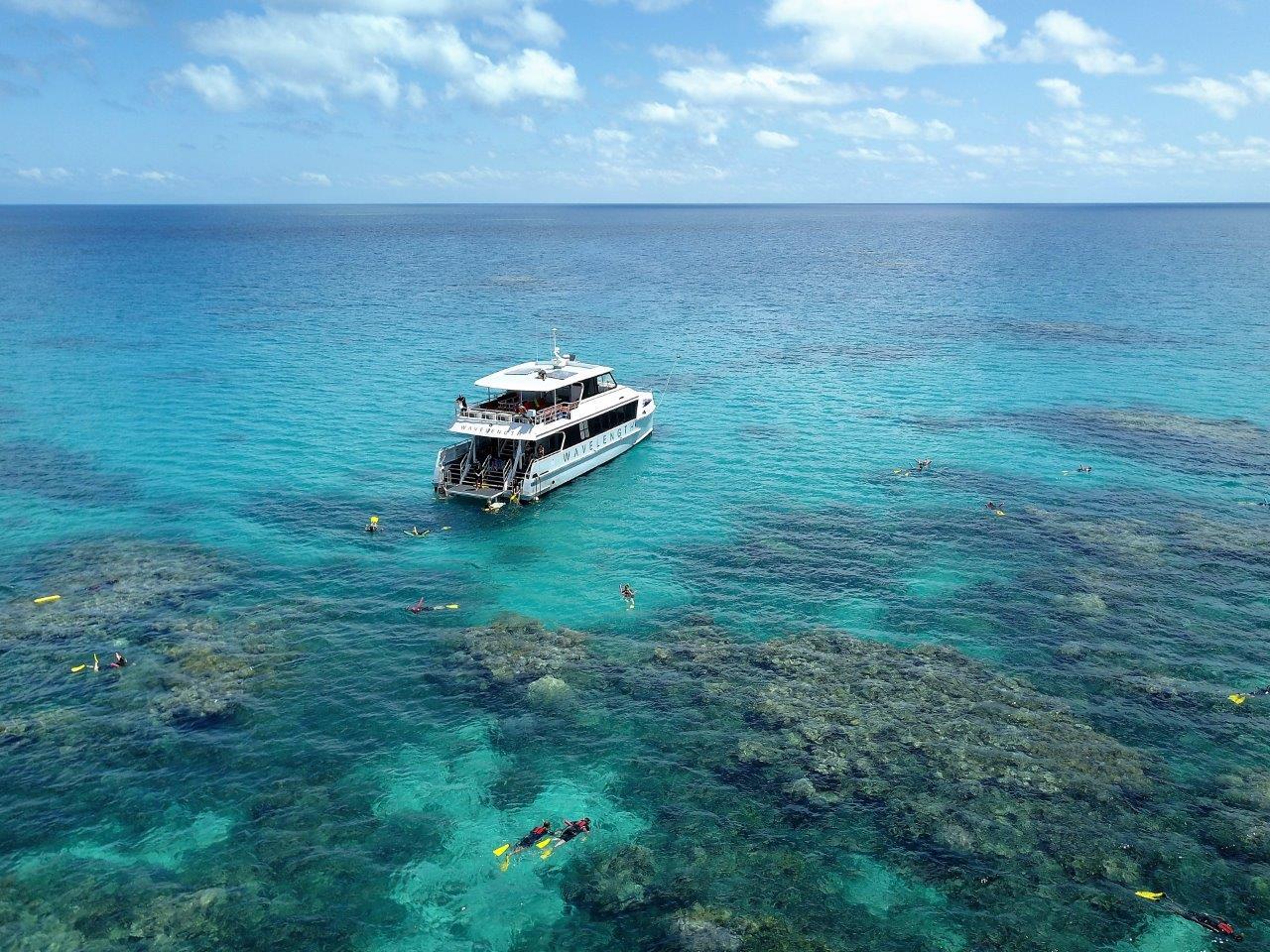
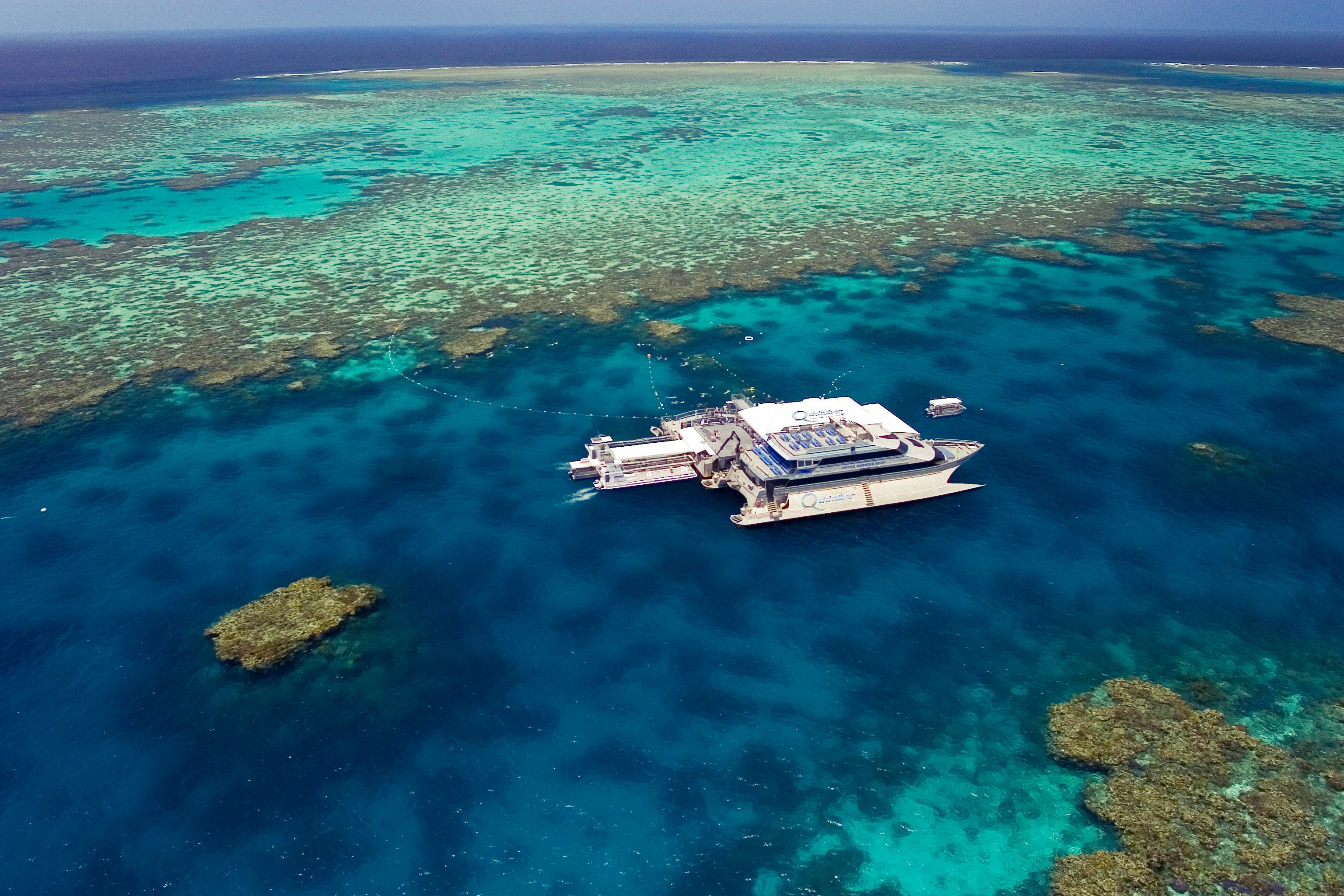
Sail to a pristine ribbon reef on the Continental Shelf for world-class snorkeling and underwater exploration
9 hours
Free Cancellation
Journey through ancient rainforest, cruise crocodile habitat, and discover where jungle meets reef
8 hours
Free Cancellation
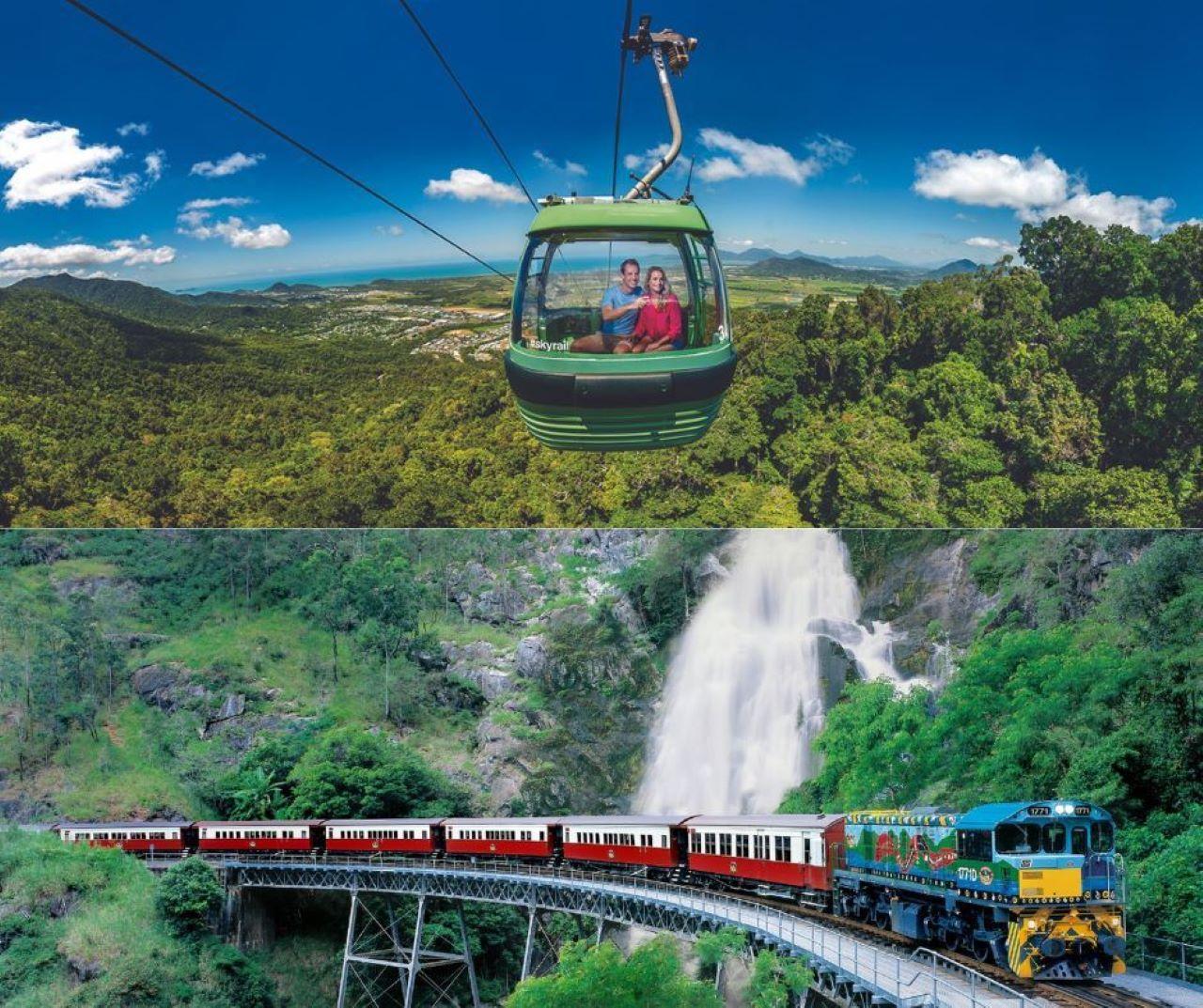
Journey through World Heritage rainforest by gondola and historic railway, with village exploration
12 hours
Free Cancellation
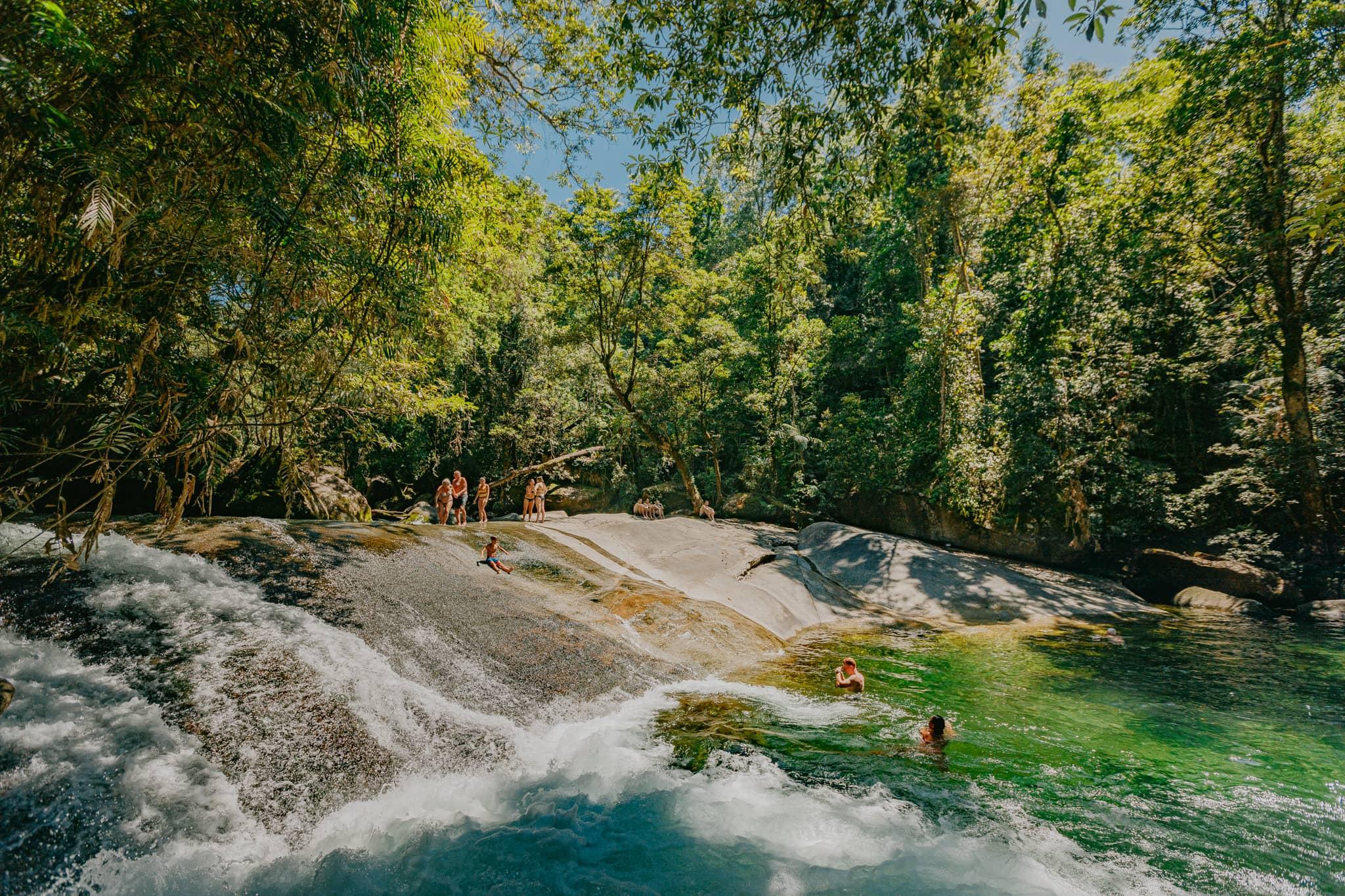
Discover pristine crater lakes, cascading waterfalls, and ancient rainforest on this full-day journey
9 hours
Free Cancellation
Full-day expedition combining canopy ziplining, guided walks, wildlife cruise, and Cape Tribulation beach
1 day
Free Cancellation
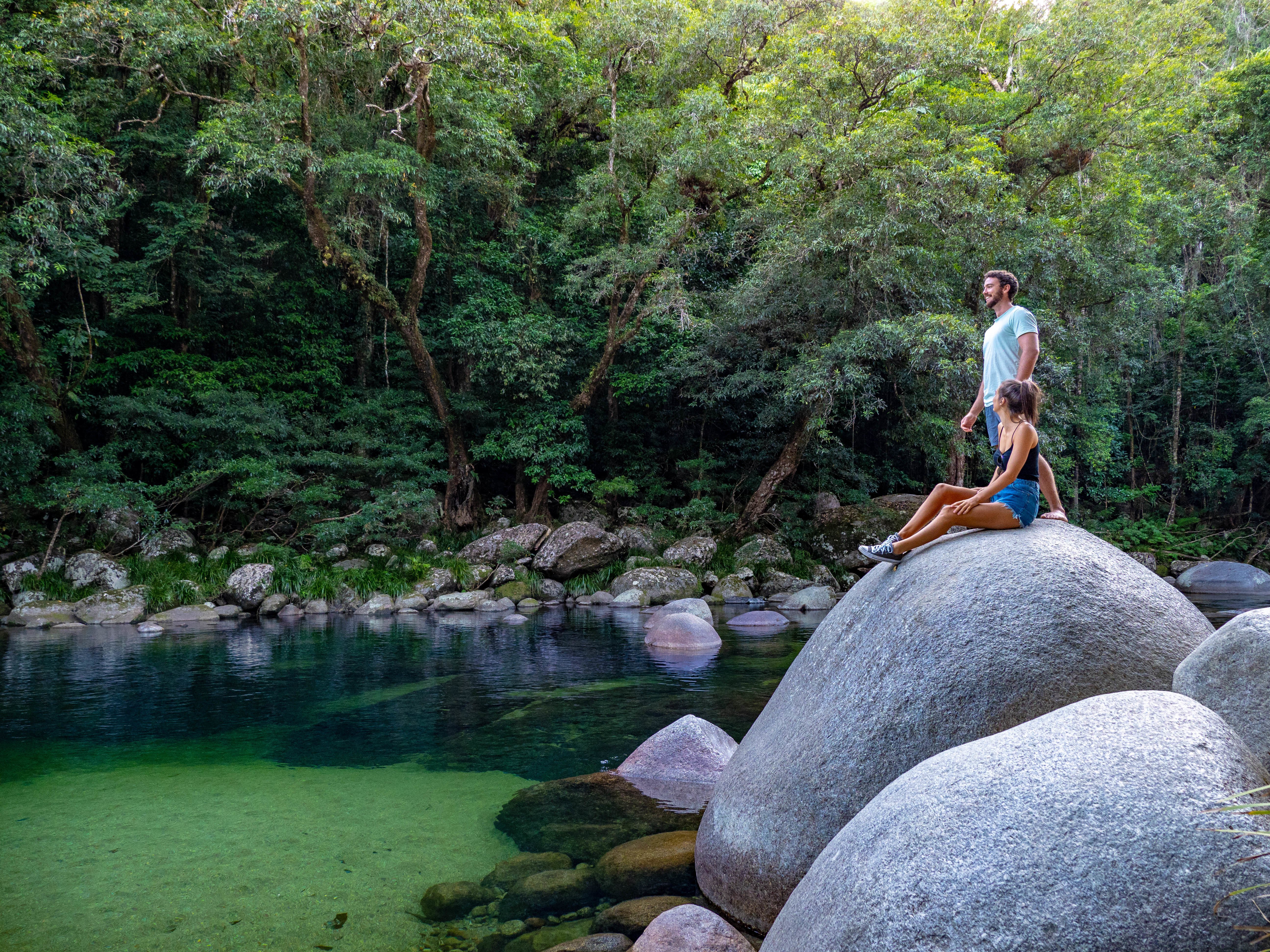
Journey through ancient rainforest, cruise for crocodiles, and swim in pristine creeks on this intimate small-group adventure
2 hours
Free Cancellation
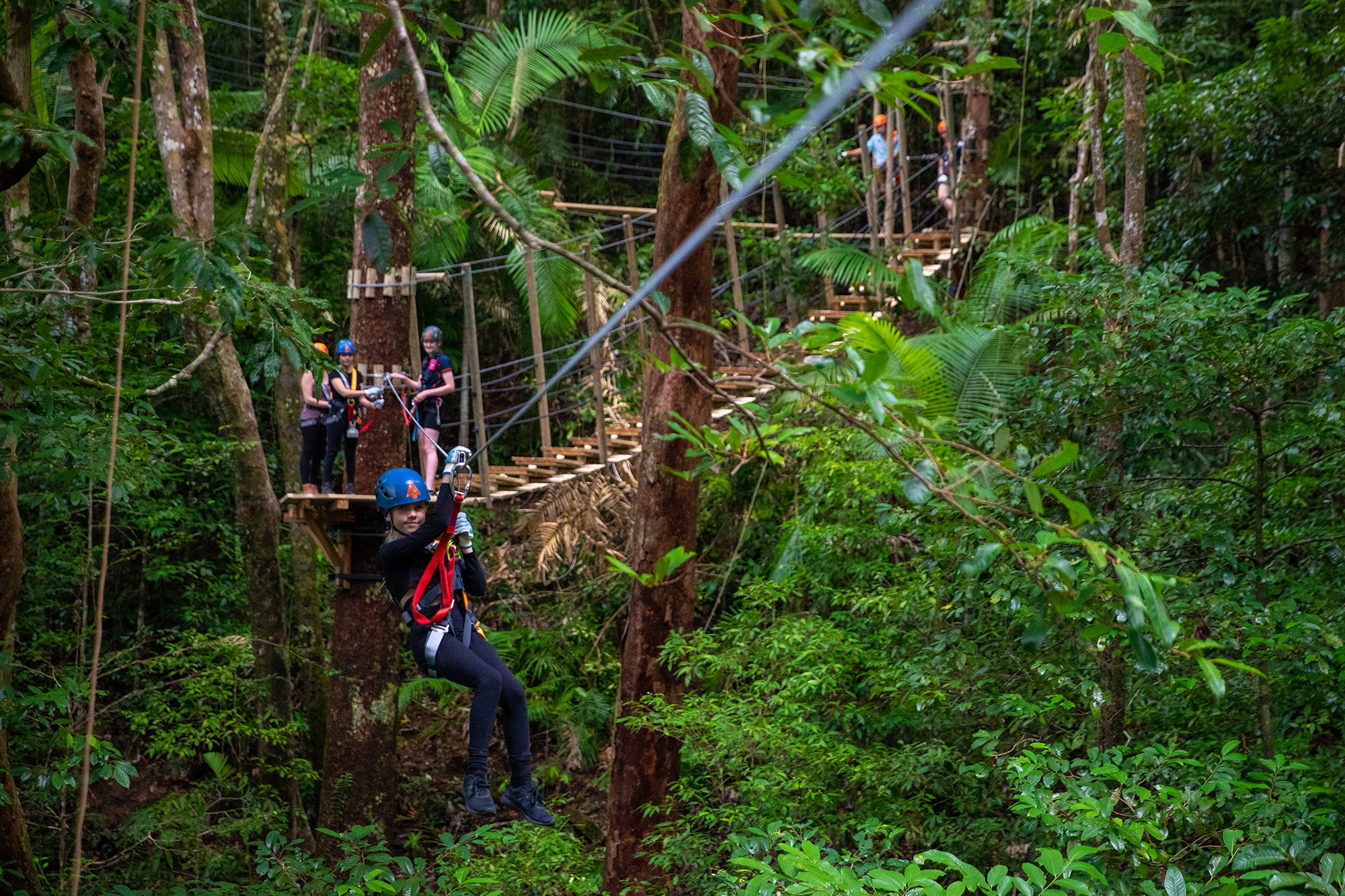
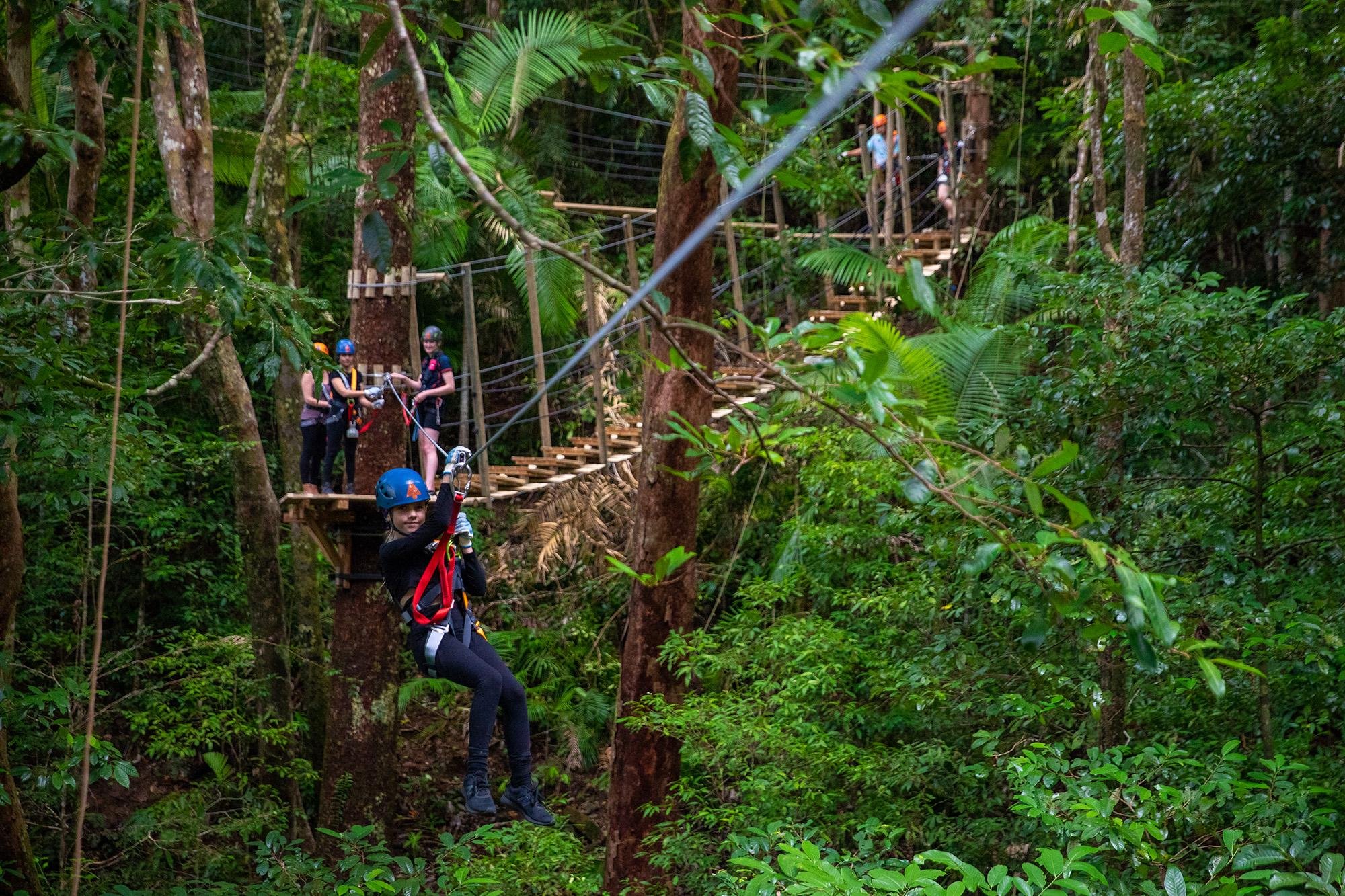
Soar through ancient World Heritage rainforest on ziplines and suspension bridges high above the forest floor
4 hours
Free Cancellation
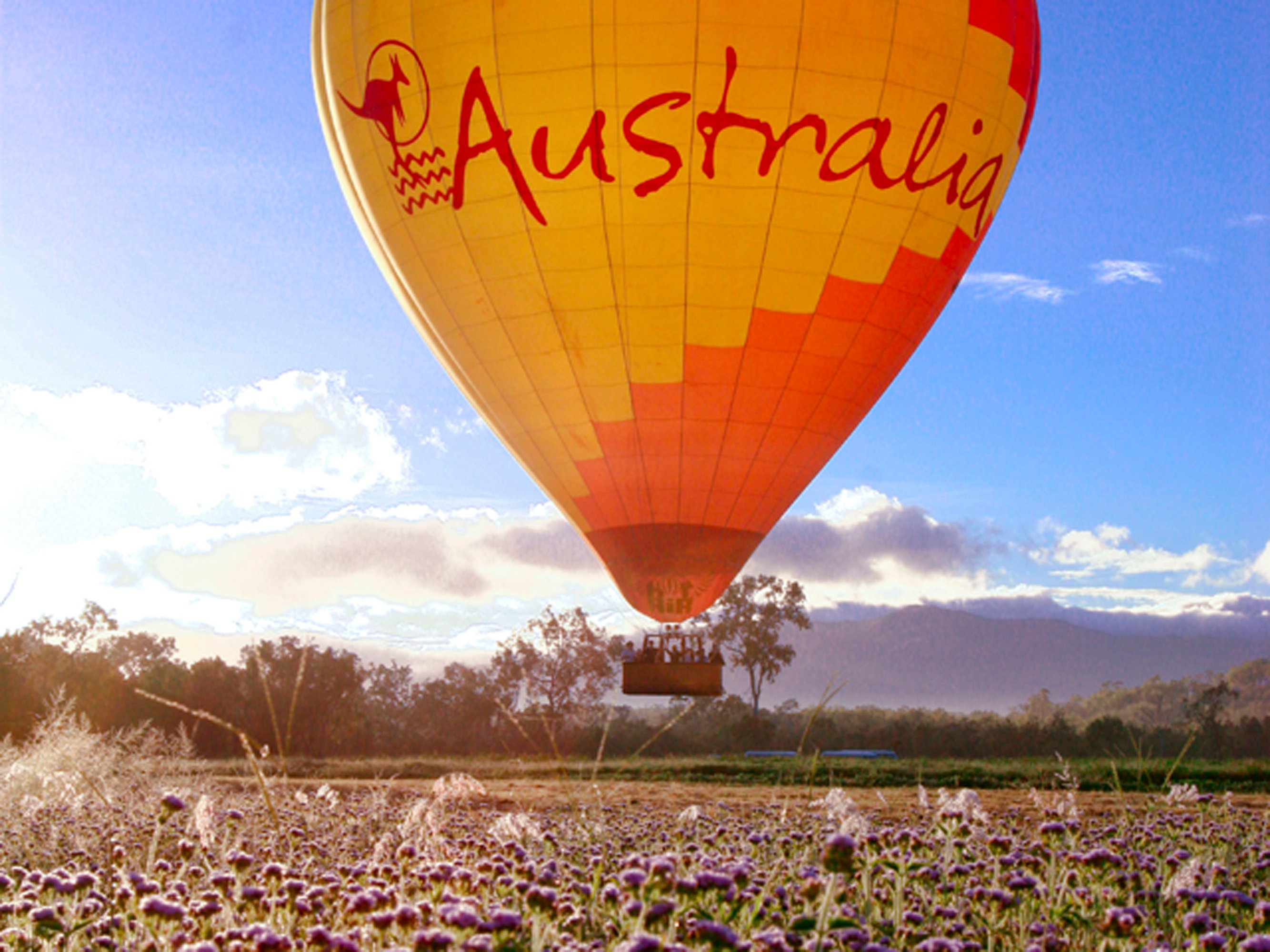
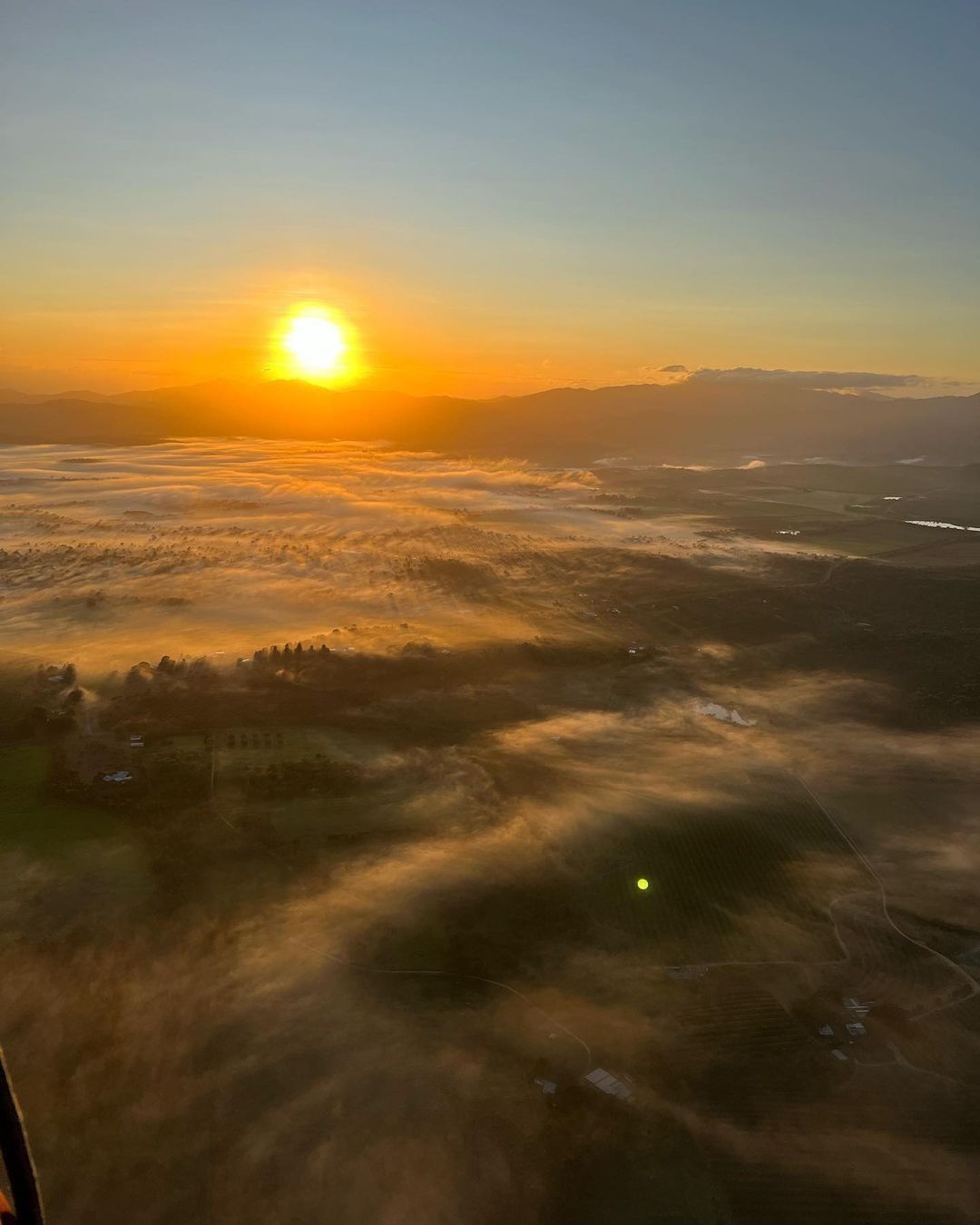
Soar above Queensland's Atherton Tablelands at sunrise with sparkling wine and breakfast upon landing
Depart Port Douglas for the uplands
Explore the crater lake and teahouse
Visit Millaa Millaa and nearby falls
Drive back to the coast
You leave Port Douglas before the coast warms, the road climbing through sugarcane fields that give way to mist-hung forest. By the time you reach Curtain Fig Tree, forty minutes inland, the air has cooled fifteen degrees.
You walk a raised boardwalk around a strangler fig whose aerial roots form a curtain fifteen metres wide, the host tree long dead inside the lattice.
At Lake Barrine you stop at the crater rim. The water lies 100 metres below, mirror-still, reflecting the canopy. You take a boat across — the only sound is the engine's low thrum and the occasional fish breaking the surface. The far shore holds old-growth rainforest, kauri pine trunks rising forty metres without a branch.
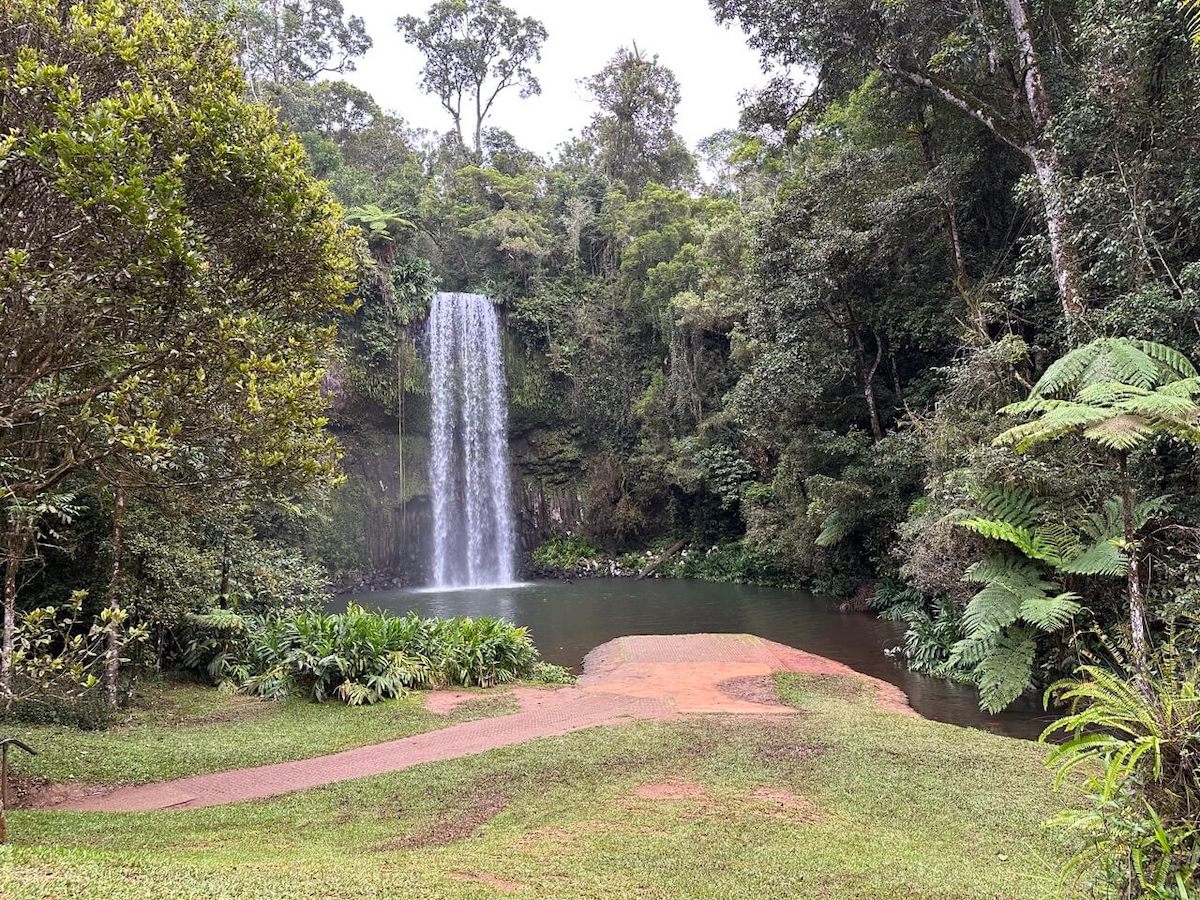
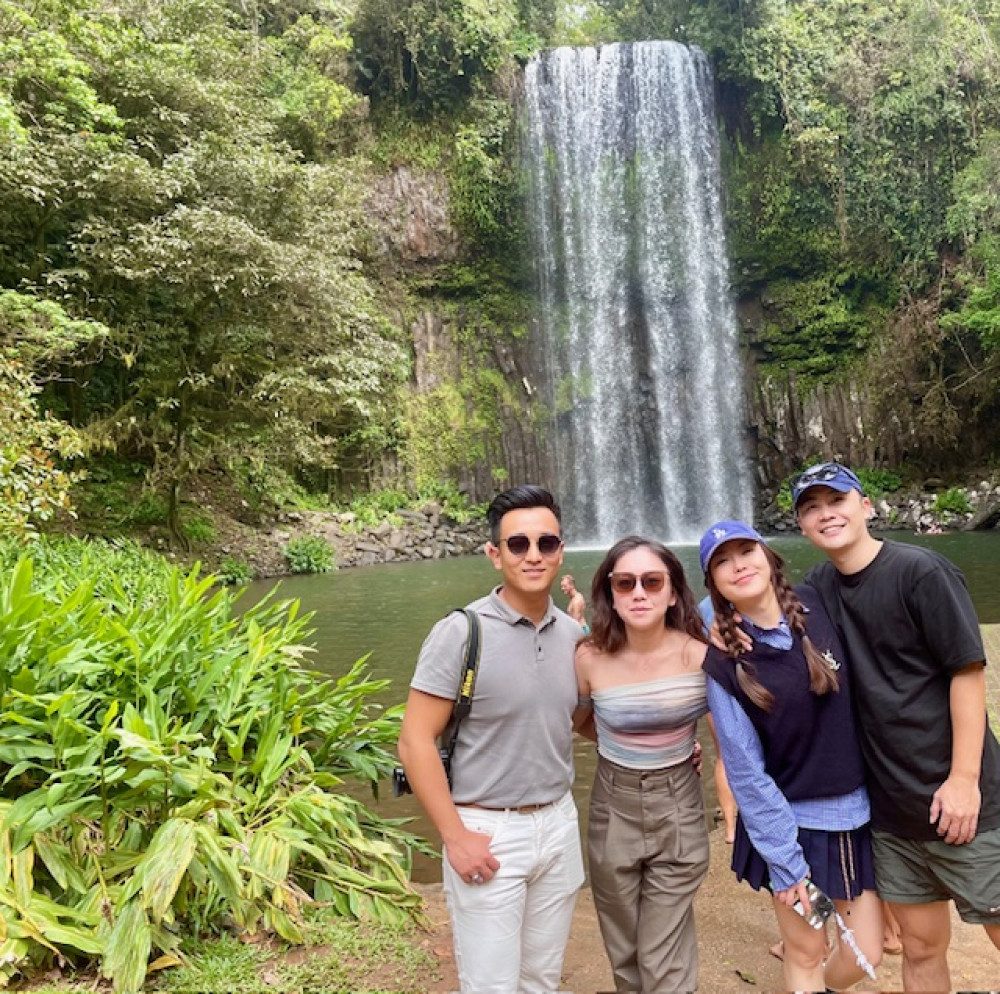
Millaa Millaa Falls appears suddenly, the cascade visible from the carpark. You walk down to the pool's edge. The water is cold, fed by streams that begin on the plateau's western slopes. Some tours pause here for twenty minutes; others move on to Zillie and Ellinjaa, two smaller falls within three kilometres. The atherton tablelands tour from port douglas route continues through Yungaburra, a village of weatherboard houses and fig trees planted in 1886. You stop at a cheese shop or coffee roaster — the region's produce is the afternoon's focus. By the time you return to the coast, the tablelands are already in shadow, the plateau catching the last light above the clouds.
All the details about your upcoming adventure in one place
The Atherton Tablelands formed 250,000 years ago when a shield volcano collapsed, leaving a plateau 900 metres above sea level.
Volcanic craters scattered across the region now hold freshwater lakes ringed by rainforest — Lake Eacham and Lake Barrine measure 65 and 62 metres deep, filled by rainfall alone, their waters a chemistry of tannic acid and dissolved basalt. The transition from coastal lowland to highland plateau happens in sixteen kilometres of switchback road, climbing from Port Douglas through sugarcane country into a climate zone more European than tropical.
The tablelands supplied timber to Cairns from the 1880s, red cedar and kauri pine cut from forests that once covered the entire plateau. What remains today is patchwork: dairy farms in cleared valleys, pockets of old-growth forest on ridge tops, and secondary rainforest reclaiming abandoned pasture. The region grows 95% of Australia's avocados, the volcanic soil rich in minerals leached from ancient lava flows. Mareeba and Atherton, the two main towns, service farms and small-scale food producers — coffee roasters, cheese makers, macadamia orchards — clustered around the volcanic rim.
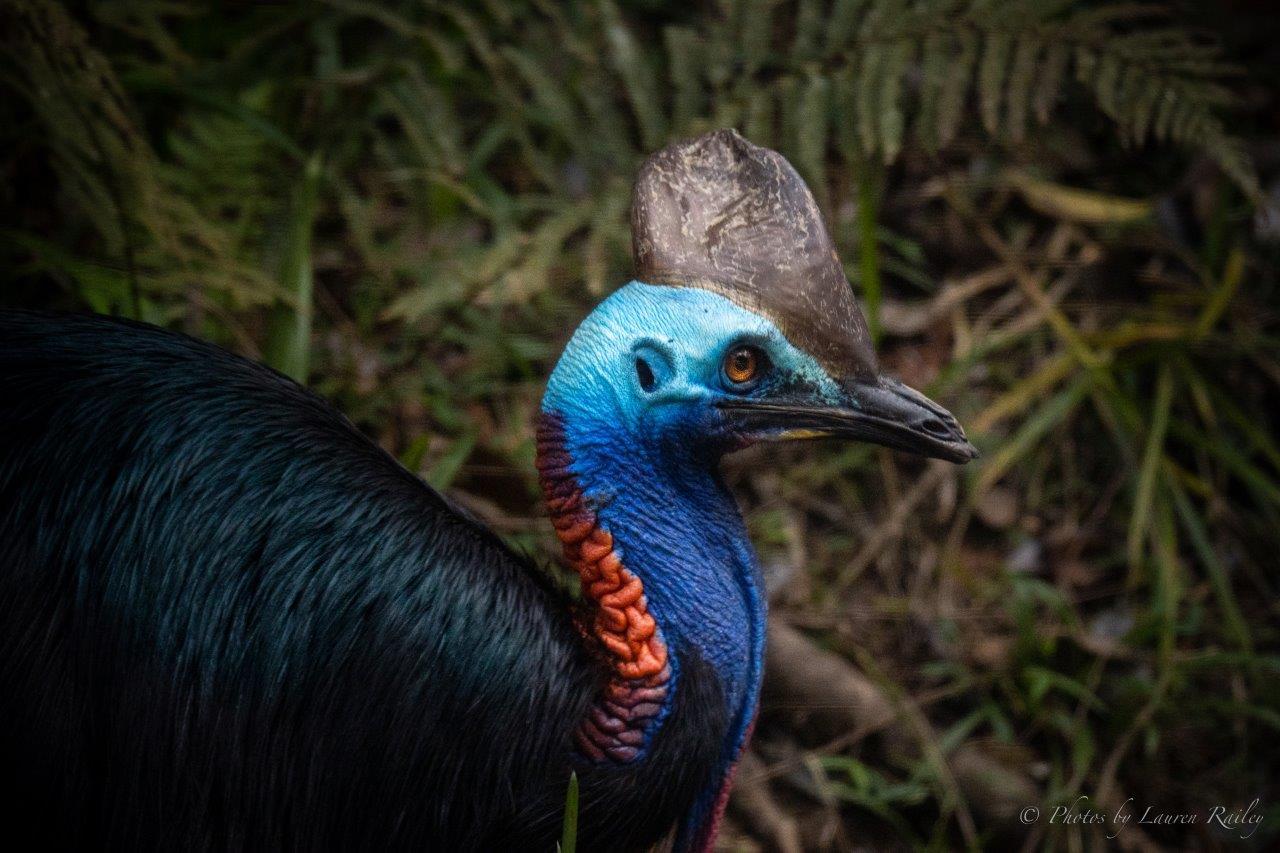
The wildlife here differs from coastal Queensland. Tree kangaroos, rare in Australia, live in high-altitude rainforest pockets. Platypus surface at dawn in Peterson Creek, their hunting patterns visible as ripple rings on still water. Boyd's forest dragon, a lizard restricted to upland rainforest, clings to tree trunks in lichen-coloured camouflage. The birdlife is dense: Victoria's riflebird performs courtship displays on exposed branches, metallic blue-green plumage flashing in filtered light.
Waterfalls mark geological fault lines where the plateau drops away. Millaa Millaa Falls, the most accessible, pours over a fifteen-metre basalt ledge into a circular pool. The falls appear in tourism imagery more than any other Queensland cascade, the symmetry of the drop and the vine-draped backdrop forming a composition repeated across decades of photography. Atherton tablelands tour from port douglas itineraries typically route through three to five waterfalls in a single day, the circuit known locally as the Waterfall Circuit. The road between falls runs through dairy country, black-and-white cattle grazing on slopes too steep for mechanised harvest.
The volcanic soil holds minerals leached from lava flows 250,000 years old.
Wear sturdy walking shoes suitable for rainforest trails and mud. Bring a light waterproof jacket as temperatures are cooler than on the coast.
Keep all personal belongings secure in your vehicle or carry a small daypack. There are no centralized lockers for a typical atherton tablelands tour from port douglas.
Photography is permitted throughout the Atherton Tablelands, but stay on marked paths to protect fragile vegetation. Aerial drone use requires specific permits in national park areas.
The area is well-suited for families, though keep children close near water features and crater rims. An atherton tablelands tour from port douglas often includes stops with educational signage.
Many natural lookouts and crater lakes in the region have limited wheelchair access. Gravel paths and uneven terrain are common throughout the hinterland.
Carry sufficient water and snacks as service stations can be sparse. Dispose of all waste properly in designated bins to keep the Atherton Tablelands pristine.
Opening Hours
00:00–23:59
Address
Atherton Tablelands, Queensland, Australia
Accessibility
Varies by location across region
Best arrival
07:00–10:00
Region
Public access area
Car · 1.5 hours · Fuel costs
Rental vehicle allows flexible travel for an atherton tablelands tour from port douglas.
Tours booked for an atherton tablelands tour from port douglas typically require cancellation 24–48 hours in advance for a full refund. The region itself has an entrance fee of 0 AUD.
Recommended time
10-12 hours
A full-day commitment is essential for an atherton tablelands tour from port douglas to account for travel time and the diverse stops across this sprawling region. By departing early, you can enjoy popular crater lakes and wildlife habitats before the peak midday crowds arrive. Pacing your itinerary to focus on specific zones like the waterfall circuit or local food trails helps minimize transit fatigue.
Crowd levels through the day
Weather · crowds · average price — dots go green to amber to red as each metric rises.
September offers pleasant temperatures for a full day atherton tablelands tour from port douglas. Expect 20-25°C daytime highs and lower humidity levels.
Arrive early between 07:00–10:00 for the best chance to spot platypus. Early morning light also creates mirror effects on crater lakes.
The volcanic plateau rising between Cairns and the Gulf of Savannah remained isolated from European settlement until the 1870s, when tin prospectors pushed west from the coast seeking new deposits. John Atherton discovered rich tin lodes near Herberton in 1877, triggering a rush that brought thousands of miners into the rainforest highlands. The mining camps needed food, and by 1885 selectors began clearing the volcanic soil for maize and dairy farms, finding the red basalt earth yielded crops impossible on the coastal lowlands. The Cairns-to-Herberton railway, completed in 1886, carved a route up the range and made commercial agriculture viable, though the narrow-gauge track took five hours to climb thirty kilometers. The First World War brought soldier-settlement schemes that parceled former rainforest into small dairy blocks, and by 1925 the Tablelands supplied most of Far North Queensland's butter and cheese. Tobacco followed in the 1930s, then peanuts and coffee as growers experimented with crops suited to the mild highland climate. Lake Eacham and Lake Barrine, both explosion craters filled by springs, became weekend retreats for Cairns families after the coastal road opened in 1934, though most visitors arrived by rail until the 1950s. The Gillies Highway, sealed in 1961, cut the drive from Cairns to ninety minutes and shifted tourism patterns permanently. Port Douglas emerged as a northern gateway in the 1980s when the Cook Highway linked it to the newly protected Daintree, and tour operators began packaging atherton tablelands tour from port douglas itineraries that combined rainforest, waterfalls, and crater lakes into day loops. The 1988 World Heritage listing of the Wet Tropics placed strict limits on further clearing, freezing the patchwork of dairy pasture, remnant forest, and volcanic lakes that defines the landscape today. Curtain Fig Tree, a strangler fig documented since the 1920s, and the Yungaburra markets, running since 1984, anchor the heritage trail that atherton tablelands tour from port douglas tickets now follow, threading between dairy towns that have traded milk cans for cafes serving locally grown coffee.
John Atherton discovers tin at Herberton, opening the plateau to European prospectors and miners.
Cairns-Herberton railway completed, enabling export of tin and allowing agricultural settlement of volcanic soils.
Soldier-settlement schemes establish dairy farming as the dominant industry across the Tablelands.
Gillies Highway sealed, cutting drive time from Cairns and making the region accessible for day tourism.
Wet Tropics World Heritage listing protects remaining rainforest and halts further land clearing.
Specialty crops—coffee, macadamias, avocados—displace traditional dairy as farm economics shift toward boutique agriculture.
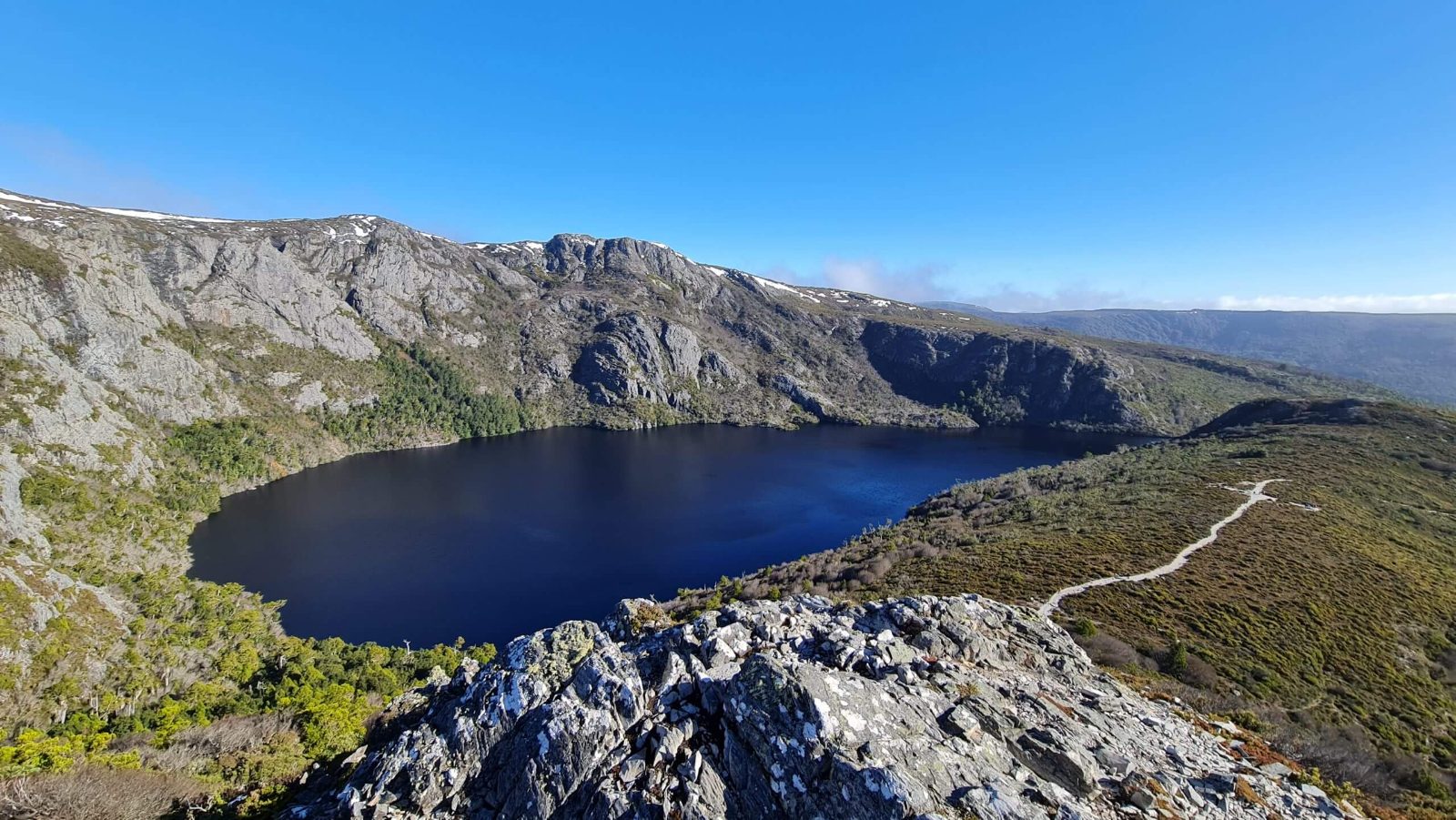
Position your tripod along the northern edge of the wooden jetty to capture the reflection of the rainforest canopy on the glass-like surface. This vantage point provides a symmetrical composition of the volcanic crater rim.
Stand on the lower rocks to the right of the plunge pool to include the ferns in your foreground with the cascading water as your backdrop. Many travelers on an atherton tablelands tour from port douglas use a long exposure to smooth the water flow here.
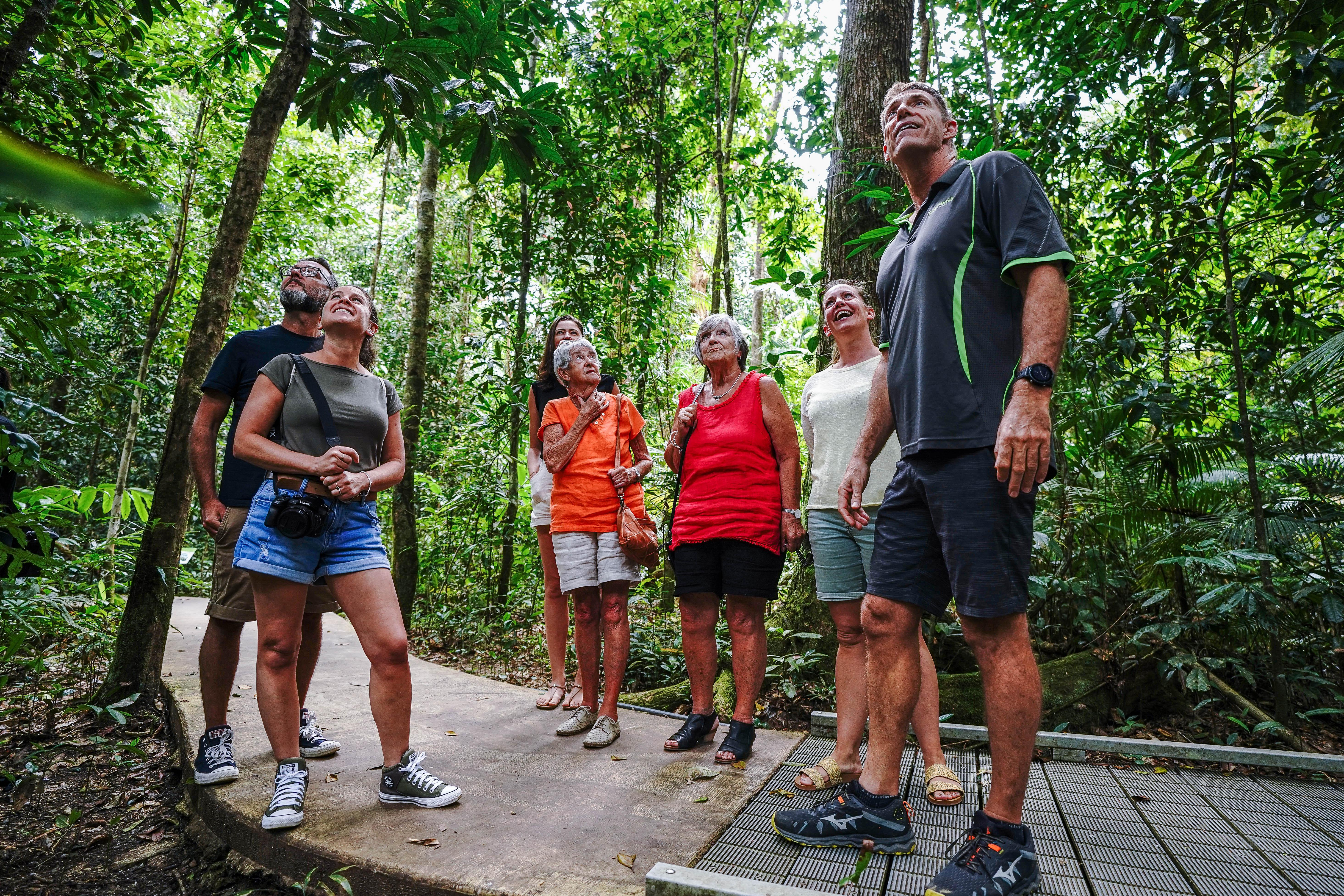
Walk to the raised viewing platform to capture the full vertical scale of the massive aerial roots dropping from the canopy. Use a wide-angle lens to frame the intricate hanging vines against the dense forest light.
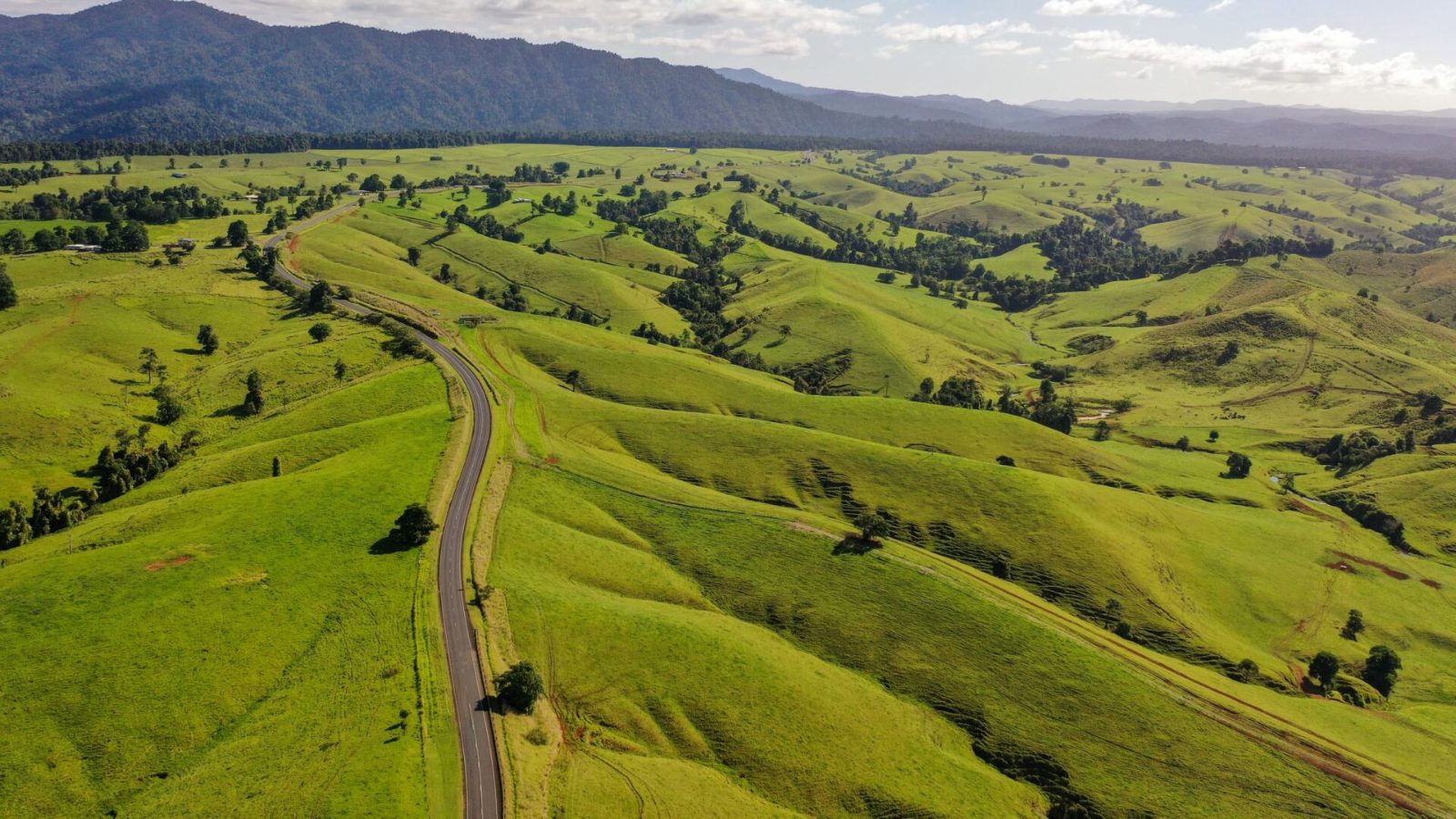
Find the designated clearing to photograph the rolling green hills and patchwork agricultural fields typical of the region. This spot is a favorite for those purchasing atherton tablelands tour from port douglas tickets to explore the highlands.
Planning an atherton tablelands tour from port douglas requires preparation for winding roads and diverse volcanic landscapes. This regional exploration offers families a chance to connect with nature across vast public areas.
Many crater lakes have accessible viewing platforms, though rugged trails often limit stroller use in rainforest sections. You may consider an atherton tablelands tour from port douglas tours option that prioritizes paved walkways for easier mobility
Regional towns provide public restrooms and baby-change stations, but these are infrequent between transit stops. Ensure you have essential supplies packed before departing, as you may need atherton tablelands tour from port douglas tickets that include stops at major hubs with reliable amenities
The scenic drive involves significant time in transit, so plan frequent breaks to manage motion sickness on mountain curves. An atherton tablelands tour from port douglas tour should be paced to allow children time to stretch their legs at park lookouts
Early morning arrivals between 07:00–10:00 provide the best chances to spot platypus and wallabies in their natural habitat. Booking atherton tablelands tour from port douglas tickets for these cooler hours helps avoid mid-day heat and maintains mirror-still water views.
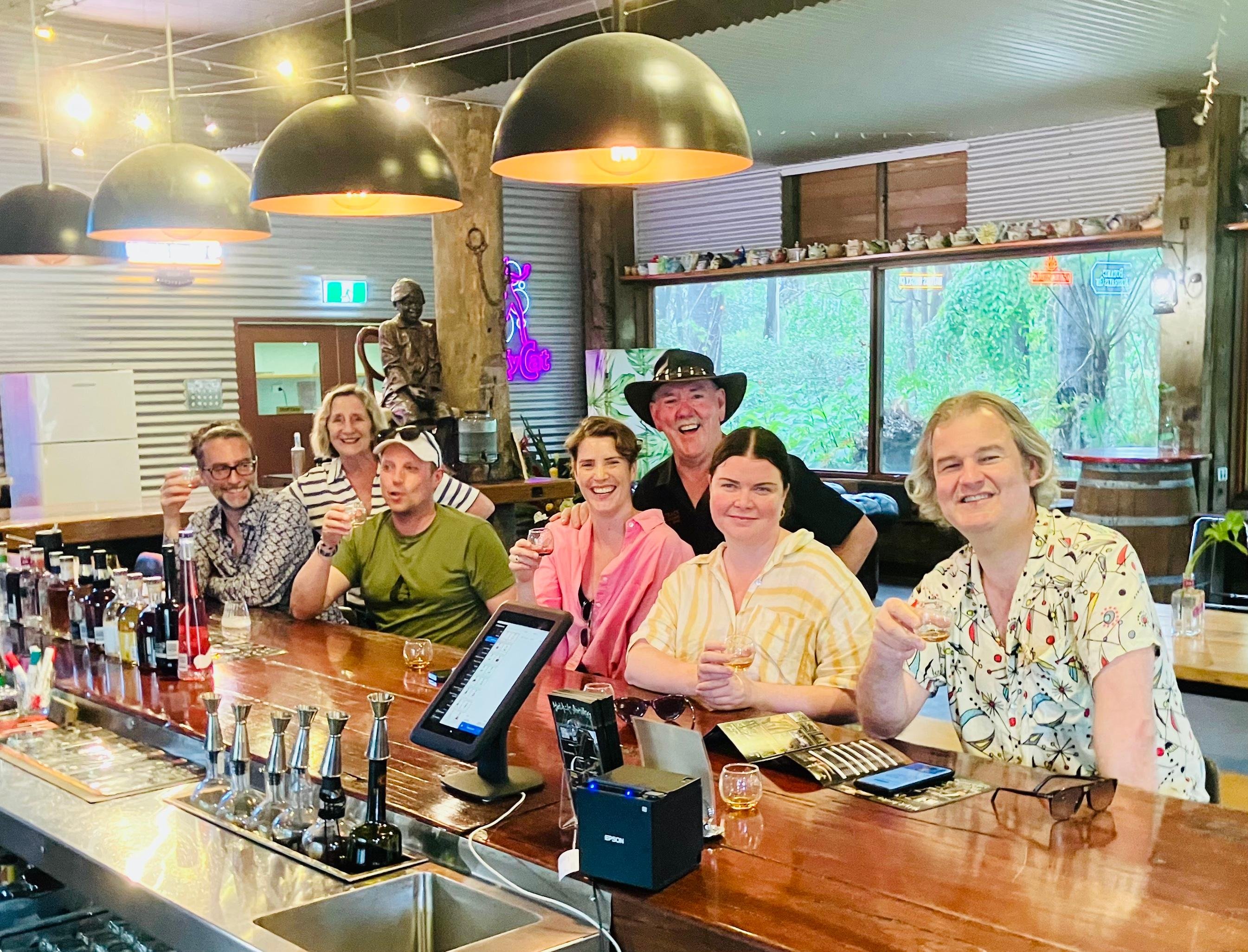
Exploring the diverse culinary landscape is a highlight for those embarking on an atherton tablelands tour from port douglas, as the region is renowned for its fertile volcanic soil and local producers. Travelers can sample fresh dairy, tropical fruit, and estate-grown coffee while traversing this elevated landscape.
Famous for extensive coffee and chocolate tastings in a relaxed setting. It provides a popular stop for groups on an atherton tablelands tour from port douglas tour.
Everything you need to know for your journey
The region is accessible 24 hours a day, though 07:00–10:00 is the recommended arrival time.
There is an entrance fee of 0 AUD, as the region is a public area consisting of multiple locations.
A full-day trip is typically best to see the major highlights without rushing.
Yes, the rainforest is lush in the rain, but ensure your vehicle is suitable for the conditions.
You can book through official tour operators directly via their respective sites.
Most tours are family-friendly, but check specific operator requirements.
You may see tree kangaroos, platypus, and various rainforest birds.
Most sites have designated parking areas, though they can fill up quickly.
Yes, standard gear is fine, but avoid tripods on busy walking tracks.
The most common way is by car, traveling south-west through the scenic ranges.
Volcanic crater lake ideal for swimming.
Massive ancient tree with hanging roots.
Deep volcanic pipe and forest walks.
Indoor collection of mineral specimens.
Historic charm and guesthouses
Standard hotel facilities
Join thousands of happy travelers who have discovered this incredible experience
Book Your Experience Now